

Household budgets are tight across the U.S. A September 2025 Ipsos survey found that 48 percent of U.S. adults surveyed said they had no money left after paying all of their monthly expenses. Other statistics support the affordability crunch. In 2024, a report by the Federal Reserve stated that 37 percent of adults said they do not have the cash on hand to cover a hypothetical $400 emergency expense.
These numbers help demonstrate why an unexpected expense, like the need to repair or replace an appliance, can feel so stressful. People in that situation will have to closely consider their options: repair, replace or buy used.
For many, cost may be the heaviest factor influencing the decision about whether to repair, replace or buy a used appliance. But the option with the lowest upfront price is not always the best one. Long-term performance and value must be considered, and your choice should never come at the expense of safety.
AHAM has developed this guide to help you make your decision.
Repair: Safety First
A widely accepted rule of thumb is the appliance should be replaced if the cost of repair exceeds 50 percent of the cost of a new appliance. However, this is a personal decision. If you go the repair route, safety should still be your top concern. Choosing the right service provider is a big part of the equation.
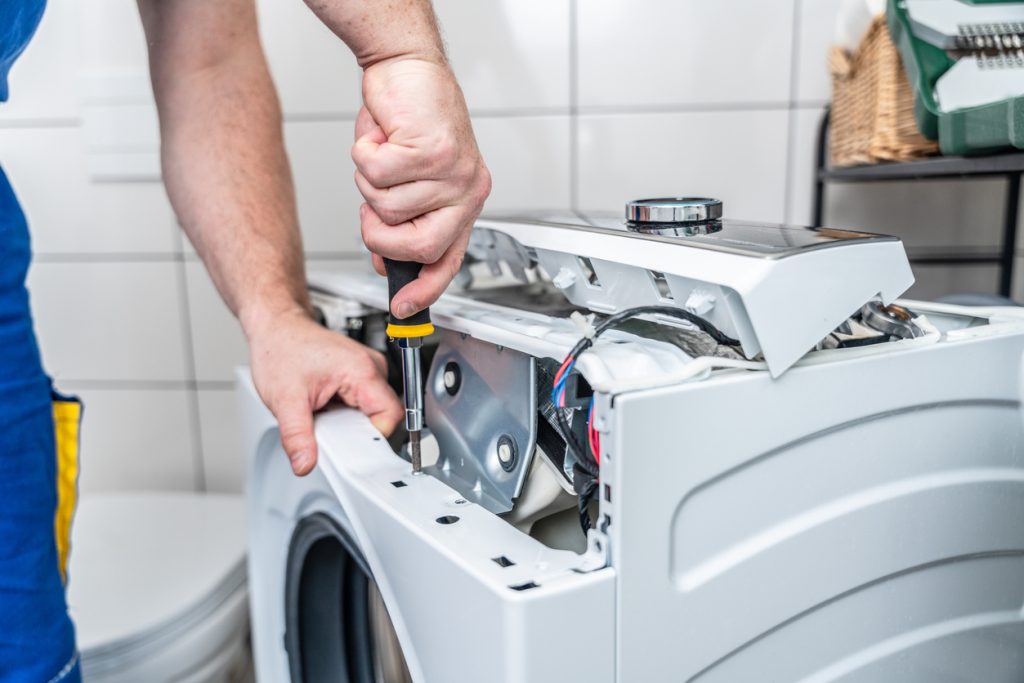
Follow these tips when you are choosing an appliance service provider.
Consider the merits of an authorized service provider: Authorized technicians have been trained to repair your specific model of appliance and have access to parts that have been tested to meet certain safety and reliability requirements. For connected appliances, authorized service providers are trained to take the necessary steps to limit electronic security risks.
Ask about the company’s safety procedures: A reputable service provider should have safety measures in place, like identification, protocols for contacting homes before arrival and background checks on technicians.
Find out about insurance and guarantees: Technicians should be fully insured so you are covered if anything goes wrong.
Learn the company’s policy on return visits: Find out what guarantees the company offers if a second visit, including additional parts and labor, is required.
Replace: Find the Right Fit
Buying a new appliance can be a significant upfront expense, even more so when the purchase isn’t planned. But manufacturers offer options at a variety of price points. Buying new can also save you costs over time, through improved energy efficiency and performance.
If you decide to replace your appliance, keep these tips in mind:
Start with your budget: Set a price range and use it to narrow down your choices. In general, higher-cost models tend to include more features.
Assess the features: Learn which features the appliance has and spend some time thinking about the features you need, the features you’d like to have, and the features you will really use. Focus on the features that fit your budget and lifestyle.
Take measurements: Make sure the appliance has the capacity you want and will fit where you need it to be installed.
Consider maintenance and care costs: Review the appliance’s use-and-care manual to find out what maintenance and care it will need. Ask the retailer if they have any recommendations for ongoing maintenance.
Ask about delivery and installation fees: Some dealers may offer these for free, but they can add to what you pay at purchase. Avoid surprises and find out the fees in advance.
Buying used: Proceed with Caution
Buying a used appliance may seem like a way to save money up front, but it can be a risky proposition. Any money you save on the purchase cost could quickly be offset by safety concerns or reliability issues.
If you do purchase a used appliance, be vigilant with your research and follow these precautions:
Carefully inspect the appliance for signs of damage: Look closely for signs of safety issues, like scorch marks, frayed power cords, compromised plugs or broken switches. Any damage beyond minor cosmetic wear could indicate a safety issue.
Ask for the repair history: Ask the seller for service records for the appliance and look for signs of DIY repairs or tampering. If the seller can’t provide the repair history, it may be time to walk away.
Do an inventory of parts and manuals: All parts, accessories and instructions that came with the appliance when it was new, including the original use-and-care manual, should be included.
Check for recalls: Check the Consumer Product Safety Commission’s listing of recalls and product safety warnings to see if the appliance model has been recalled or is associated with any known safety issues.
It is never convenient when an appliance stops working, and it is natural to focus on the least expensive option to get your home back up and running. But that decision should be made carefully, with thorough consideration of safety and performance as well as cost. Taking the time to do your homework today will help you avoid bigger costs tomorrow.
 Subscribe via RSS


